
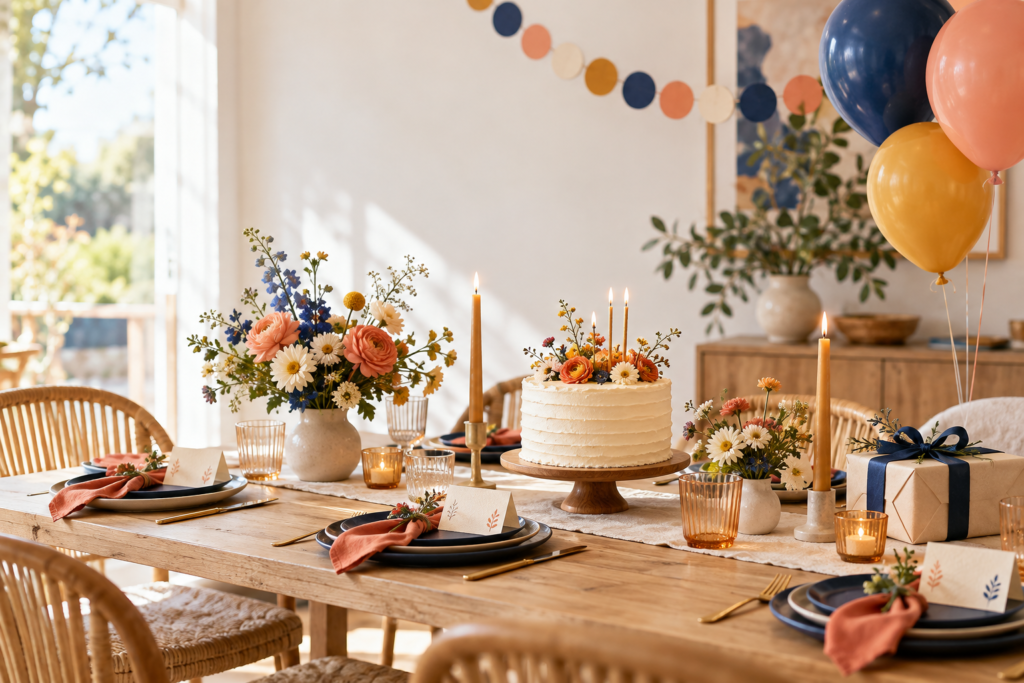
A birthday can feel special without turning the planning into a second full-time job. Start with the experience you want guests to have, then make the practical choices that support it. This simple birthday party planning guide helps you move from a loose idea to a celebration that feels personal and manageable.
1. Choose the feeling and the main priority
Before choosing decorations, write down a few words for the celebration: relaxed, colorful, playful, elegant, outdoorsy, or family-focused. Then pick the one thing that matters most to the guest of honor. It might be time with friends, a favorite activity, a beautiful dessert table, or a particular theme. Use that priority to guide decisions when time or budget feels tight.

2. Set a realistic budget
Choose a total spending limit that works for you before shopping. List the major costs you expect—such as the venue, food, decorations, activities, invitations, and favors—and record what you have already paid. Leave some room for small last-minute needs. If the estimate grows, return to your main priority and simplify the details that matter less.
3. Confirm the date, place, and guest list
Check the date against the guest of honor’s schedule and the people who are most important to invite. Decide whether you are hosting at home, at a venue, or outdoors. Consider capacity, setup time, weather plans, access needs, and what the location provides. A working guest list helps you estimate food, seating, and supplies before you commit to purchases.
4. Turn the theme into a simple design direction
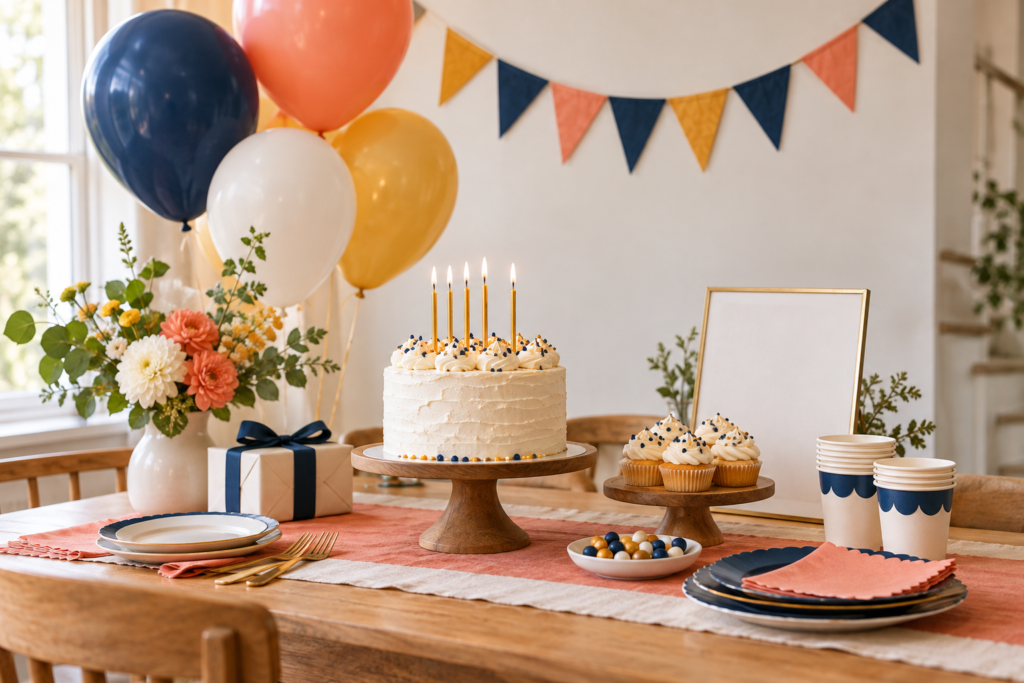
You do not need a different decoration for every surface. Choose a small set of visual cues: a color palette, one motif, and one focal point. For example, a favorite animal can appear on the invitation and cake table while a coordinated palette carries through napkins and signs. Reuse items you already own where they fit. Repeating a few details often makes a room feel more connected than adding many unrelated decorations.
5. Send clear invitations and collect useful details
Include the date, start and end times, location, RSVP method, and RSVP-by date. Add practical information guests may need, such as parking or an outdoor-weather note. Ask invitees to share any relevant dietary or access needs through a private reply. Keep the RSVP list in one place so you can update headcount and follow up without searching through messages.
6. Make a celebration-day timeline
Work backward from the party start time. Note when the space needs to be ready, when food should arrive, and when any activity, cake, or group photo will happen. Keep the schedule flexible enough for conversation and unexpected delays. Give each setup task an owner, and prepare what you can in advance. A short, visible timeline can make it easier for helpers to know what comes next.
7. Do one final check, then enjoy the day
Before the celebration, review two lists: items to bring or buy, and tasks to set up. Confirm the headcount and any venue arrangements. Pack supplies together by activity or area, and keep essentials such as tape, scissors, serving tools, and cleanup bags easy to find. Once guests arrive, let the plan support the gathering rather than compete with it. The people and the shared moment are the heart of the celebration.
Use planning tools that fit your process
If you would like a more structured way to organize the details, the Birthday Success System™ brings together birthday planning resources including a checklist, budget planner, guest-list planner, and timeline. It is a digital product; review its listing for the included files, access details, and license before purchase.
With a clear priority, a workable budget, and a few connected design choices, birthday planning can feel more focused—and leave more room for the celebration itself.
Keep exploring KDD Studio™
Connect what you learned to a product, tutorial, free resource or the next step in your creative journey.
Explore the Shop